Štark Arena — Belgrade's EuroLeague Fortress
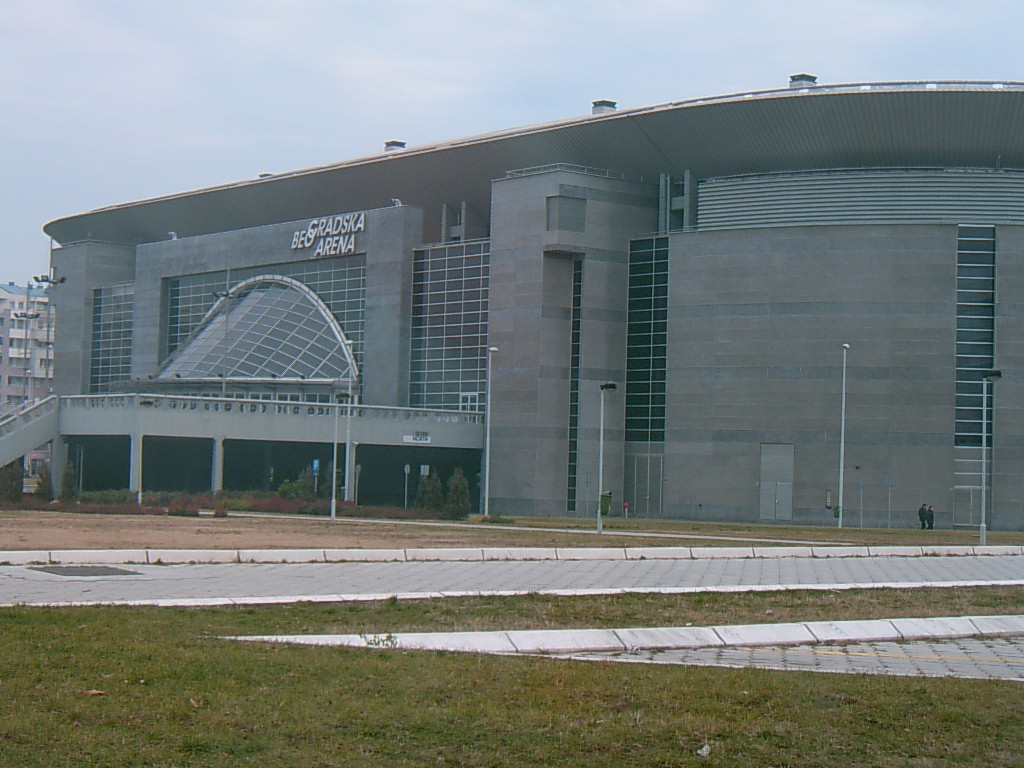
Štark Arena in Belgrade, opened in 2004 in the Novi Beograd district, is one of Europe's largest indoor halls and the loudest single argument that basketball's most ferocious atmospheres live outside the NBA entirely. With around 18,000 seats configured for basketball, it hosts the Serbian capital's two giants, Partizan and Crvena zvezda (Red Star), for their biggest EuroLeague nights. When it is full, players who have competed on both sides of the Atlantic routinely describe it as the most intense room they have ever played in — a place where the noise is not background but a physical force.
Serbia's basketball gravity
To understand the arena, you have to understand the country around it. Serbia produces NBA and professional talent at a per-capita rate that embarrasses far larger nations — a relentless pipeline of skilled playmaking big men, shooters and high-IQ guards stretching back through the Yugoslav golden generations and continuing through today's MVP-level exports. Basketball in Serbia is not a niche sport competing for attention; it is a central thread of national identity, taught and obsessed over from childhood. All of that culture concentrates in Belgrade, where the two great clubs split the city's loyalties down the middle into black-and-white and red-and-white halves, dividing families and neighbourhoods along club lines.
The Eternal Derby
The rivalry between Partizan and Red Star — the "Eternal Derby" — is the beating heart of the building. When the two clubs meet, Štark Arena fills with choreographed walls of flags, thunderous drums and curtains of flares, the kind of coordinated ultra display that European football fans would recognise instantly. The choreography is planned for weeks; the noise is sustained for the entire game; and the sense of occasion is closer to a cup final than a regular fixture, every single time. Visiting players and coaches often speak about the derby with something like awe, because there is simply no equivalent experience in American sports, where crowd participation rarely reaches this level of organised intensity.
A silver dome in Novi Beograd
Architecturally, the arena is a broad silver dome — a flattened elliptical roof set over a concrete drum, ringed by the wide boulevards and socialist-era housing blocks that define Novi Beograd. It lacks the glass-and-LED skin of the newest NBA palaces, and that is part of its character: its beauty is brutal and functional rather than sleek, a serious building for a serious basketball city. Interior shots are giveaway material for an Arena Spotter player, because the geometry is a steep single bowl that wraps the floor tightly, and on derby nights the air itself is thick with a haze of smoke that no NBA broadcast would ever permit on its floor.
Big nights and big numbers
Štark Arena has staged EuroLeague Final Fours, phases of the EuroBasket continental championship, Davis Cup tennis ties and arena-scale concerts, marking it as the region's premier indoor venue. But its proudest statistics are about basketball attendance: Partizan's EuroLeague campaigns have set continental attendance records here, with regular-season games regularly out-drawing typical NBA crowds — a figure European basketball fans quote with considerable relish whenever the "best atmosphere in the world" debate comes up. The building has become a symbol of how passionately Europe can support the club game when a great team and a fanatical city meet in a large enough room.
A national stage
Beyond the two clubs, the hall doubles as the stage for the Serbian national team's send-offs before major tournaments and the homecoming celebrations of the country's NBA stars. When Belgrade-raised champions bring trophies and medals home, this is where the city gathers to greet them, blurring the line between a sports venue and a place of national ritual. That dual role — fortress for the clubs, gathering place for the country — gives the building a civic weight that pure entertainment arenas rarely carry, and it is part of why the atmosphere on the biggest nights feels so total.
Why the atmosphere matters beyond Belgrade
It is worth asking why a hall in Belgrade should interest a fan whose basketball diet is mostly NBA, and the answer is that Štark Arena represents an entire alternative vision of how the sport can be experienced. The American model sells comfort, technology and entertainment between whistles; the Belgrade model sells belonging, intensity and a sense that the result genuinely matters to everyone in the building. Neither is wrong, but seeing the second kind expands your understanding of what basketball can be. Many of the European and international stars who reach the NBA were forged in exactly this environment, where the pressure of a packed, partisan hall is part of the apprenticeship, and you can often see that hardening in how unflappable they look on the game's biggest stages later. For a basketbadle player, recognising Belgrade is also recognising a node in the global game's nervous system — a place where a meaningful share of the league's international talent first learned what high-stakes basketball feels like. Watching a derby from this building, even on a screen, tells you something about the sport that no NBA broadcast quite can, and it makes the flags and nationalities scattered through the puzzles feel less like trivia and more like a map of where the game truly lives.
Fortress, not shopping mall: the Belgrade tells
In Arena Spotter, Štark Arena belongs firmly to the European wing of the pool — the corner of the game we map in Europe's basketball cathedrals — and a handful of tells will identify it. Look for a silver, flattened dome with none of the naming-rights razzle of American arenas, surrounded by wide concrete plazas and the distinctive apartment blocks of Novi Beograd. Street-level shots may show Cyrillic or Serbian signage, an immediate clue that you are in the Balkans rather than North America. And in interior shots, the bowl will look steeper, tighter and rowdier than NBA standards, often wreathed in smoke. The simplest mental shortcut: if the photo feels like a fortress rather than a shopping mall, think Belgrade before you think of any NBA market.